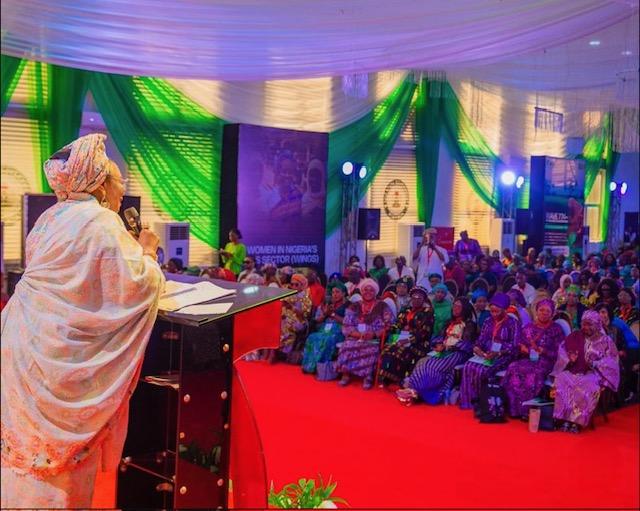
Nigeria’s goal of achieving a $1 trillion economy is within reach if the country addresses the structural barriers hindering the progress of women, children, families, and vulnerable citizens. This was the message from Minister of Women Affairs and Social Development, Hajia Imaan Sulaiman-Ibrahim, during her Ministerial Statement at the 25th National Council of Women Affairs and Child Development in Benin City, Edo State.
The Minister highlighted the existing social and economic gaps, stating that despite women owning 43% of micro, small, and medium enterprises (MSMEs), only 9% have access to formal credit. She also expressed concern that girls in rural areas are “twice as likely to be out of secondary school as boys,” emphasizing the need for urgent action.
Speaking on the significance of the Council, Minister Sulaiman-Ibrahim described it as a vital platform for shaping gender-responsive policies under the Renewed Hope Agenda, aimed at driving Nigeria’s economic growth and development.
“It is always exciting to be in a space that puts women, children, youth, the vulnerable, and the abandoned voices at the centre of discussion. That is where the real work of building nations begins,” she said.

Minister Imaan Suleiman addressing the audience
Sulaiman-Ibrahim stressed that recommendations from the Council will directly guide national frameworks and programmes for women, children, and families.
The Minister highlighted the Ministry’s implementation of the Renewed Hope Social Impact Interventions-774 (RH-SI774), which she launched earlier this year in Nasarawa State and which has begun early-stage interventions in more than 18 states.
The programme spans women’s economic empowerment, agricultural value-chain support, clean-cooking solutions, skills acquisition, market linkages, and family-strengthening initiatives through the Families First programme.
Since the last Council meeting in Jos, she said the Ministry has reached “hundreds of thousands of women beneficiaries” and recorded progress in enforcing the Child Rights Act and the Violence Against Persons (Prohibition) Act (VAPP).
Sulaiman-Ibrahim commended Edo State for being named one of Nigeria’s seven CEDAW Cities, describing the recognition as a mark of collective advancement in the domestication of global gender commitments.
She also cited state-level reforms pushing women’s rights forward, “In Adamawa State, women are now legally allowed to own and inherit land and property… women now hold 100% of vice-chairperson positions across all 21 Local Government Councils…In Niger State, all Local Government vice-chairmanship positions are now being reserved for women.”
The Minister reinforced the economic imperative for gender inclusion, referencing World Bank estimates that closing the labour-force participation gap between men and women could add $229 billion to Nigeria’s GDP by 2030.
She urged stakeholders to pursue measurable accountability and accelerated action:
“How do we ensure inclusion moves from meeting rooms to measurable action?” she asked.